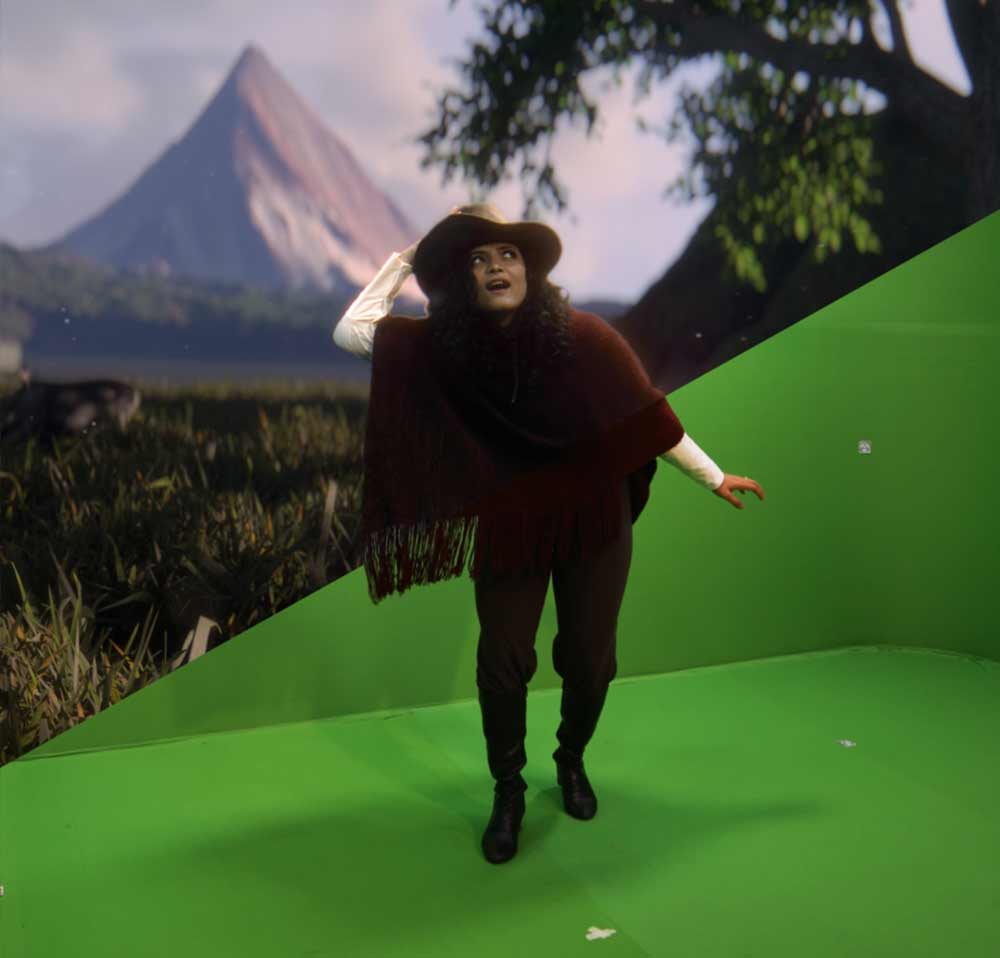
A film still plays an important role. It establishes intent and builds emotional context. You see faces,
environments, effort, and motivation. You understand why the work exists.
They don't just ask what you do. They ask what difference it actually made.
Films by themselves aren't enough anymore. After watching, a viewer often feels the initiative is meaningful yet still cannot clearly explain how it actually worked, what changed, what process was followed, or what exactly improved. This is where newer formats enter. Not to replace cinema, but to support it.
Many initiatives involve systems training models, water distribution, livelihood processes, behavioural programs. Showing them in real footage often makes them harder to grasp because reality contains too many details at once. 2D explainer videos solve this by removing noise.
They break a process into stages: problem → intervention → flow → outcome
Instead of searching through visuals to understand the logic, the viewer sees the logic itself. Within a minute, the structure of the initiative becomes clear enough to repeat to someone else. At this stage, communication shifts from awareness to comprehension.
Some work cannot be simplified into diagrams because it depends on space and structure, infrastructure
upgrades, environmental restoration, mechanical systems, urban planning.
Here, 3D visualisation becomes necessary.
Rather than describing what changed, the communication reconstructs it. A viewer can see scale, alignment, before-after differences, or hidden components that cameras cannot capture. CGI and visual overlays also allow comparisons within real footage, making improvements immediately visible.
Data stops feeling abstract when it appears attached to a real environment. Numbers become observable changes.
Around 2020–2022, audiences shifted from passively consuming information to actively verifying it. As digital interactions became routine, people trusted what they could explore, not just what they were shown. Instead of watching demonstrations, they preferred interacting with them making immersive formats relevant rather than experimental.
Augmented Reality places information into the real world, points at a device at a site or map and layered
details like systems, stages, or impact data appear instantly. The viewer doesn’t just watch; they discover.
Virtual Reality goes further, letting them step inside the transformation of a restored space or before-after
environment experienced spatially, not explained.
At that point, communication stops feeling like documentation and becomes observation. And observation
rarely needs persuasion.
What is emerging is not a new format replacing an old one. It is a structure where each layer answers a different question:
Together they convert effort into clarity.
Good work has never been the real limitation. Explanation has. As audiences process information faster and verify it visually, initiatives that are difficult to grasp simply fade from memory. Those that can be understood quickly travel further through conversations, sharing, partnerships, and support.
The future of impact storytelling therefore isn’t about producing more content. It is about reducing the
effort required to understand the work.
When people don’t have to interpret the impact, they can focus on believing it. And once they believe it,
they naturally begin to advocate for it.