Educational research has consistently demonstrated that children retain information delivered through visual and animated formats at significantly higher rates than information delivered through text or audio alone. The dual coding theory developed by cognitive psychologist Allan Paivio explains why: the brain processes visual and verbal information through separate channels, and when both are engaged simultaneously, memory encoding is stronger, recall is faster, and retention is more durable.
For children specifically, the benefits are amplified. A child's brain is in a period of intense neural development; connections between sensory, emotional, and cognitive processing regions are forming rapidly and require rich, multi-sensory stimulation to develop well. Animated educational content is uniquely positioned to provide exactly this stimulation.
Beyond memory and retention, animated content creates something that textbooks almost never do: emotional engagement. When a child identifies with an animated character navigating a social situation, learning to greet respectfully, to manage frustration, to speak confidently in front of others; they are not just receiving information. They are experiencing a rehearsal.
The brain processes vicarious experience through animated characters using the same neural pathways as direct experience. Children learn by watching, and the more vivid and emotionally resonant the watch, the deeper the learning.
A child who watches a story about confidence will feel more confident than a child who reads a paragraph about it. Emotion is the gateway to learning and animation is the most reliable key.
Mathematics has textbooks. Science has laboratories. Languages have grammar exercises. But the skills that arguably shape a child's life most profoundly; communication, confidence, emotional intelligence, social awareness, personal presentation have historically been the hardest to teach through traditional formats.
These are experiential skills. They cannot be learned by reading about them. They must be modelled, practiced, and reinforced ideally in contexts that feel safe, engaging, and relevant to the child's lived experience.
A child watching an animated peer navigate their first introduction; speaking clearly, making eye contact, greeting with warmth is receiving a behavioural model that text simply cannot provide.
When that animation is coupled with activities, mirror exercises, and real-time role-play prompts (as ACA's courses are), the learning becomes embodied rather than theoretical.
Children do not just know what confident communication looks like. They feel it and begin to practise it.
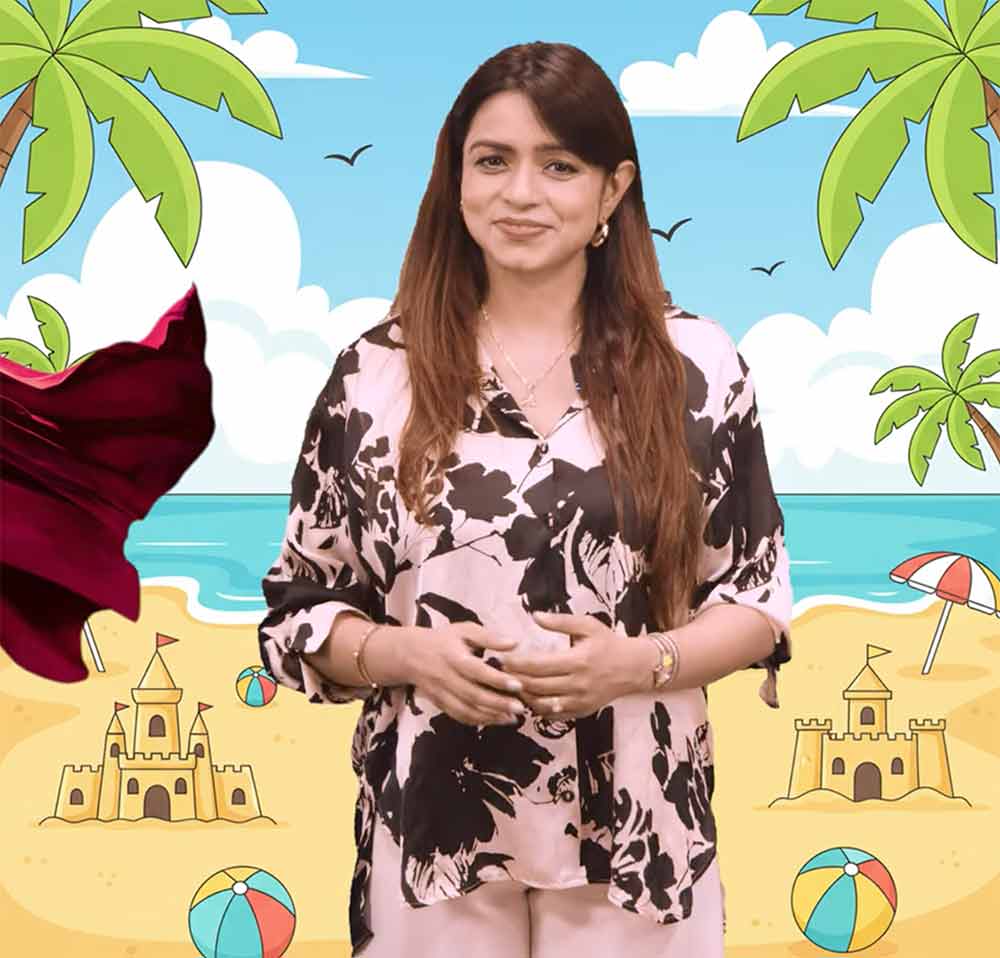
The animated content in Anamya Creative Academy's children's programme; including the viral educational video that has reached thousands of young viewers across India demonstrates exactly how effective this medium is for teaching manners and social etiquette.
Children respond instinctively to animated characters demonstrating respectful behaviour, because the format removes the authority pressure of direct adult instruction.
The lesson is absorbed in the emotional register of play and storytelling, not obligation.
Watch how ACA brings manners education to life through animation: youtu.be/Jf_wIRen7BU
Habits formed in early childhood are the habits most likely to persist into adulthood.
Animation allows educators to demonstrate hygiene routines, healthy habits, and personal care practices in a way that is immediately relatable for young children without the embarrassment or resistance that adult-instructed lessons can sometimes generate.
When a child sees a character they like performing a morning routine, brushing their teeth, or organising their space, the behaviour registers as aspirational rather than obligatory.
The shift toward animated educational content is not niche. It is global, accelerating, and backed by the investments of the world's largest learning organisations.
Platforms like Khan Academy, BYJU'S, BBC Learning, and Sesame Street have all moved animation to the centre of their content strategy not as a concession to children's preferences, but as a deliberate pedagogical choice.
The COVID-19 pandemic accelerated this transition dramatically. When classrooms went digital and the competition for a child's attention shifted to the living room screen, educators learned quickly that static slides and talking-head videos could not hold attention the way animated, interactive content could.
The organisations that had already invested in animated educational content found their audiences engaged and growing. The ones that had not found themselves rapidly rebuilding.
In India specifically, the demand for high-quality animated educational content for children is at an all-time high and still significantly underserved.
Parents and educators alike are searching for content that combines genuine developmental value with the visual quality and emotional engagement that today's digitally fluent children expect.
At the same time, education itself is undergoing a larger technological transformation. Smart classrooms, digital learning platforms, AI-assisted teaching tools, and interactive online learning environments are rapidly becoming an integral part of modern education systems across the world.
From personalised learning recommendations to adaptive assessments and AI-powered educational assistance, technology is no longer separate from education; it is actively shaping how the next generation learns, communicates, and consumes information.
Children today are growing up in an ecosystem where screens, interactive media, and intelligent digital systems are already embedded into their daily learning behaviour.
Forward-looking educational institutions are therefore focusing not only on information delivery, but on attention retention, interactivity, emotional engagement, and personalised learning experiences.
This shift is precisely why animation-led and digitally adaptive education models are becoming increasingly valuable.
ACA has been designed with this evolving ecosystem in mind.
By combining animation, interactive learning methods, human-led guidance, and digitally accessible course structures, ACA is actively adapting to the future of education rather than reacting to it later.
The academy recognises that the future classroom will not be limited to physical spaces alone; it will exist across digital platforms, smart learning environments, and AI-supported educational experiences where engagement and emotional connection will matter more than ever.
Anamya Creative Academy exists precisely at this intersection where the science of animated learning meets the expertise of a world-class educator and the production capability of one of India's leading creative studios.
Founded by Saumya Chaturvedi, internationally certified Personality & Image Coach, Soft Skills Trainer, and NLP Practitioner with over nine years of experience, 500+ workshops delivered, and more than 1,000 individuals mentored ACA brings a depth of educational philosophy and developmental understanding that most content creators simply do not have access to.
And because ACA is part of the Anamya ecosystem, a production house with full-service animation, VFX, and post-production capability, its courses are not just well-designed. They are beautifully made.
More importantly, ACA's learning model is not built on animation alone. It is built on the powerful combination of animated storytelling and guided human interaction; an approach increasingly recognised globally as one of the most effective ways to engage young learners.
International educational formats such as Ms. Rachel have demonstrated how children respond most deeply when educational visuals are paired with warm, expressive, human-led communication.
ACA adopts this same philosophy through the presence of Saumya Chaturvedi as the face, mentor, and guiding educator within the learning ecosystem.
This blend matters because children do not only learn from visuals. They learn from expression, tone, emotional connection, behavioural modelling, and human reassurance.
Animation captures attention, but trusted human interaction builds emotional familiarity and confidence.
By combining professionally designed animation with Saumya Chaturvedi's interactive teaching approach, ACA creates an environment where learning feels personal, engaging, and emotionally safe for children.
Saumya Chaturvedi's background makes her uniquely suited for this role.
As an internationally certified Personality & Image Coach, Soft Skills Trainer, and NLP Practitioner with years of experience working directly with children, teenagers, and young adults, she brings both educational expertise and emotional intelligence into the learning process.
Her understanding of communication psychology, behavioural development, confidence-building, and child engagement allows ACA's content to go beyond entertainment and become truly developmental in impact.
The animation quality, the visual storytelling, the pacing and emotional register of every lesson reflect the same production standards that Anamya applies to films for national brands and government campaigns.
The result is educational content that children want to watch and parents feel confident enrolling their children in.
Led by Saumya Chaturvedi internationally certified Personality & Image Coach, Soft Skills Trainer, and NLP Practitioner with 9+ years of experience, 500+ workshops, and 1000+ individuals mentored ACA brings animated, self-paced, interactive learning to children and young adults across every stage of development.
Watch ACA's animated children's education in action: youtu.be/Jf_wIRen7BU
Connect with Us now: +91 9119971113 · info@anamya.co.in