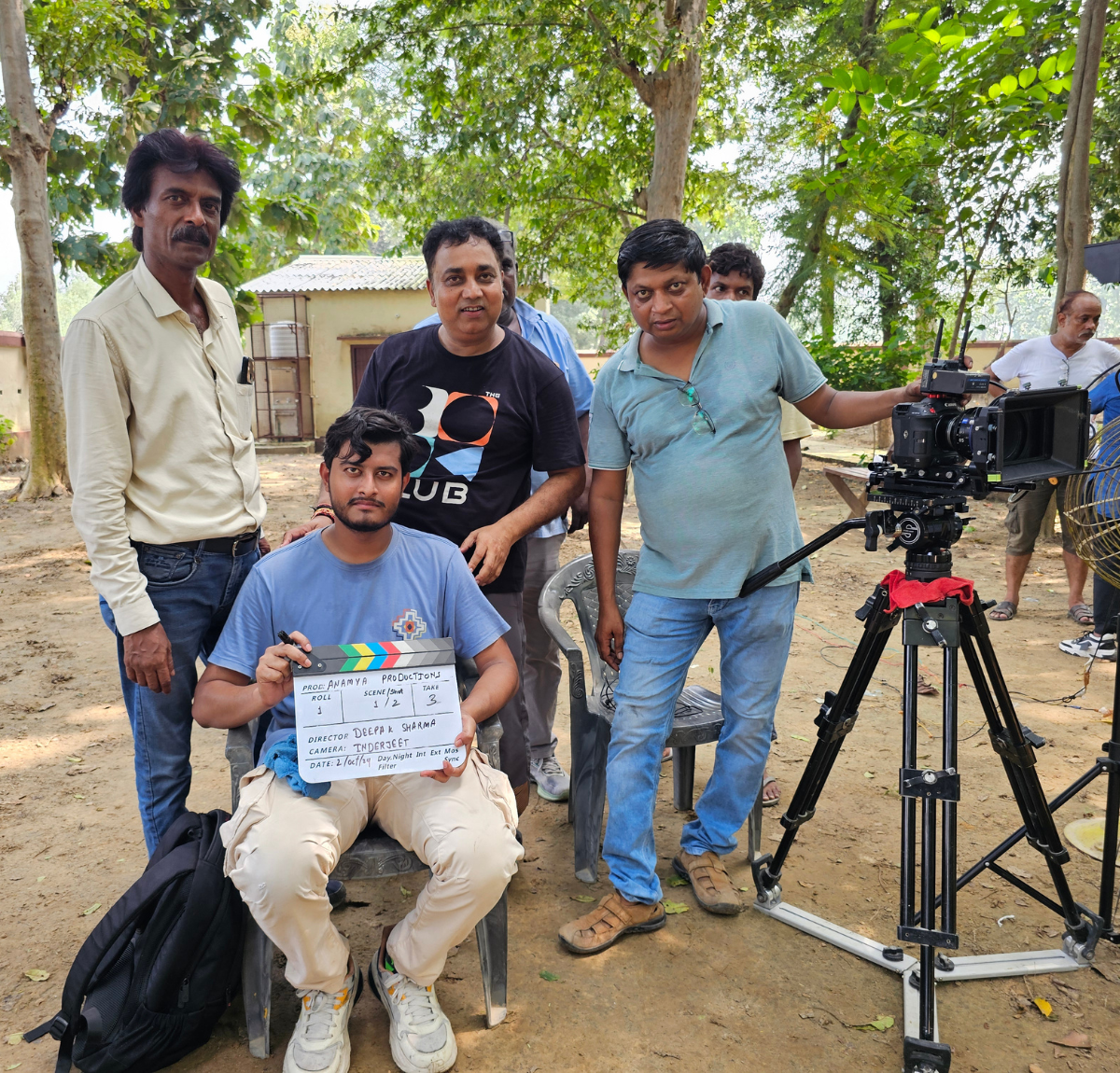
Corporate scripts love to talk at people from a position of detached authority, delivering data points as if a lack of information is the only thing holding a community back. But out in the field, you learn that behavior is deeply tied to survival, culture, and identity. A glossy PSA telling someone they are doing it all wrong doesn’t spark a change; it builds a wall. True social change through films requires a shift in perspective. You have to strip away the clinical posture of a consultant and adopt the raw, observant eye of a storyteller. It means understanding that Behaviour Change Communication (BCC) is a delicate dance of breaking down generational conditioning without stripping away a community's dignity. You have to capture the subtle emotional triggers that make a person pause, rethink, and choose a different path.
Here is the raw truth about creating Social Impact Films from the view behind our viewfinders.
In corporate storytelling, everything is clean. The problem is neat, the solution is perfect, and the hero is flawless. In social impact films, that approach is dead on arrival. Real communities smell a manufactured story from a mile away. If you show a character who magically changes their entire life because of one conversation, the audience disconnects. True impact storytelling requires capturing the friction. It’s about showing the hesitation, the relapse into old habits, and the social pressure from neighbors. Behavior changes when the audience sees a character who looks, talks, and struggles just like them and still manages to take one small step forward.
Some of the most critical storytelling for social impact campaigns deal with topics wrapped in deep societal shame. You can’t just script a voiceover to shout facts about these issues. Our biggest learning? The real shift happens in the silences, the glances, and the subtext.
As filmmakers, our job isn't just to point a camera; it's to build an environment on set where non-actors feel safe enough to share their genuine reality. Social change through films doesn't happen during the grand speeches; it happens in a quiet exchange between a mother and daughter over a cooking fire, captured naturally without a heavy crew invading their space.
Ten years ago, the industry thought you could make one great film, dub it into five languages, and change a country. It doesn’t work that way. A gesture that signifies respect in one state might mean absolutely nothing in another. A joke that lands in a northern village might alienate an audience in the south. When we design visual campaigns, the strategy is as local as the casting. True behavior change requires deep ground-level research before the camera package even leaves our office.
We don't just shoot and pack up; we track how our narratives live out in the wild. If you're curious about how we bridge the gap between creative execution and grassroots reality, dive into our world.
From the Director’s Desk: Check out our latest Insights & Updates dispatch on our website. In our recent editions, we pull back the curtain on how we navigate sensitive community dynamics and share stories from our field productions.
If you are a changemaker, a development sector leader, or an organization looking to move past sterile corporate videos and into stories that actually move the needle, let’s talk.
Anamya Productions and Consultancy is officially empanelled Audio-Visual Producer Agency with the Central Bureau of Communication (CBC), Ministry of Information & Broadcasting, Government of India. We possess the seasoned perspective, the creative muscle, and the compliance framework required to execute large-scale public interest campaigns for government bodies and pan-India institutions.
Let’s skip the corporate jargon and make something that matters.