From regional-language storytelling to international distribution and intellectual-property ownership, Anamya reflects on Asia's expanding role in global entertainment following the Asia x Global Executive Summit at MIPCOM Cannes 2026.
Anamya Productions & Consultancy Pvt. Ltd. | October 2026
The international entertainment industry is undergoing a significant change in how stories are developed, distributed and consumed.
For decades, the movement of television content across borders was largely shaped by established Western production and distribution markets. Today, streaming platforms, evolving audience preferences and the increasing international appeal of local-language entertainment are creating opportunities for a much wider range of storytellers.
Asia is becoming an important part of this transformation.
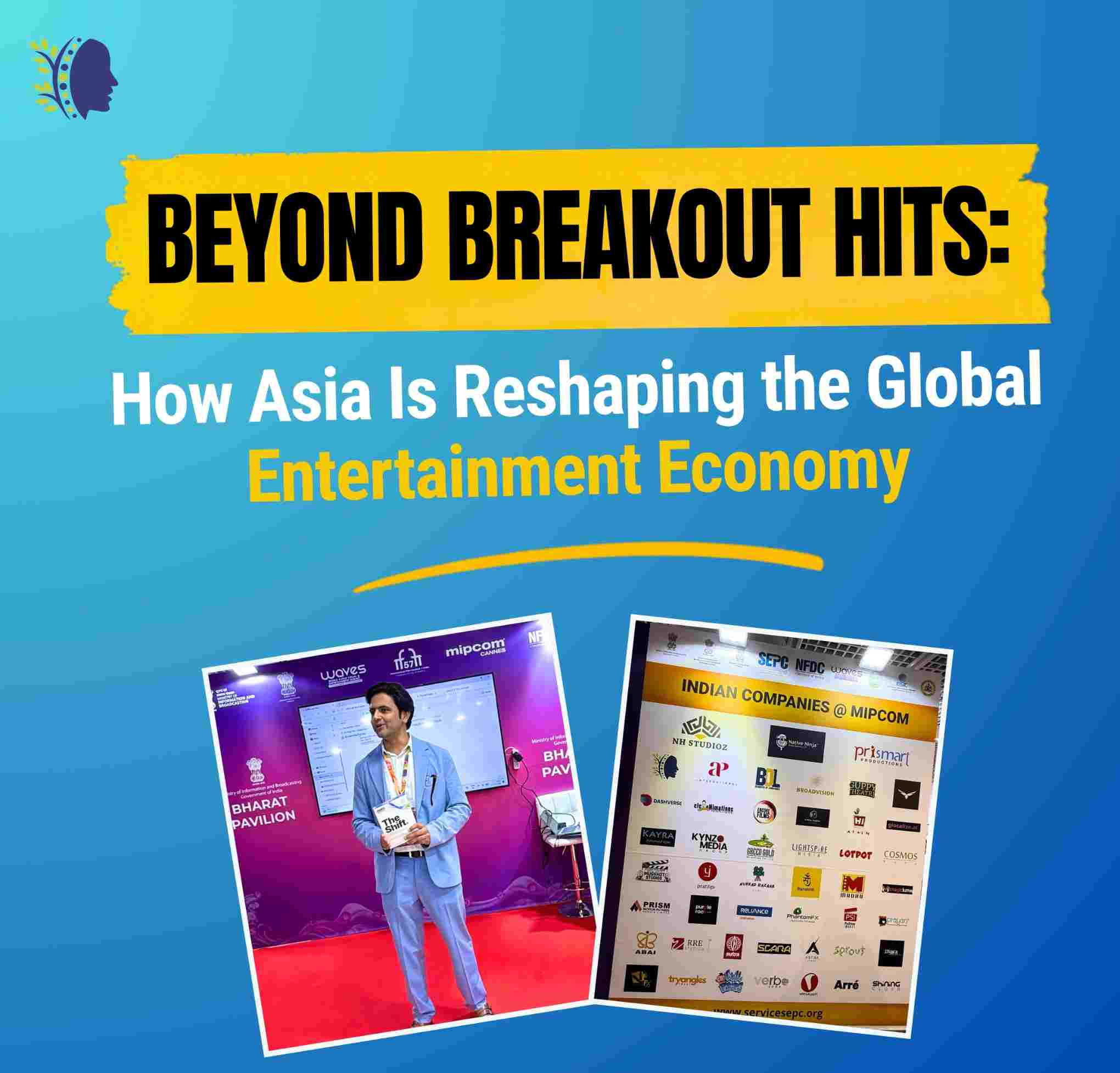
The success of Korean dramas, the international popularity of Japanese animation, India's extensive multilingual entertainment industry and the expanding digital-content ecosystems of Southeast Asia illustrate the diversity of the region's creative capabilities.
However, the opportunity is no longer defined simply by whether an individual Asian title can become an international success.
The larger question is how Asia can build sustainable entertainment businesses around original stories, professional production capabilities, intellectual-property ownership and long-term international distribution.
This was the focus of the Asia x Global Executive Summit, held at MIPCOM Cannes 2026 on October 12, in partnership with ContentAsia.
Representing Anamya Productions & Consultancy Pvt. Ltd. were Apoorv Chaturvedi, Managing Director, and Chahat Aggarwal, Director & Creative Head, who participated in the summit's industry roundtable discussions.
For Anamya, headquartered in Lucknow with a corporate presence in Noida, the experience offered an opportunity to examine the changing international entertainment landscape and the role independent Indian production companies can play within it.
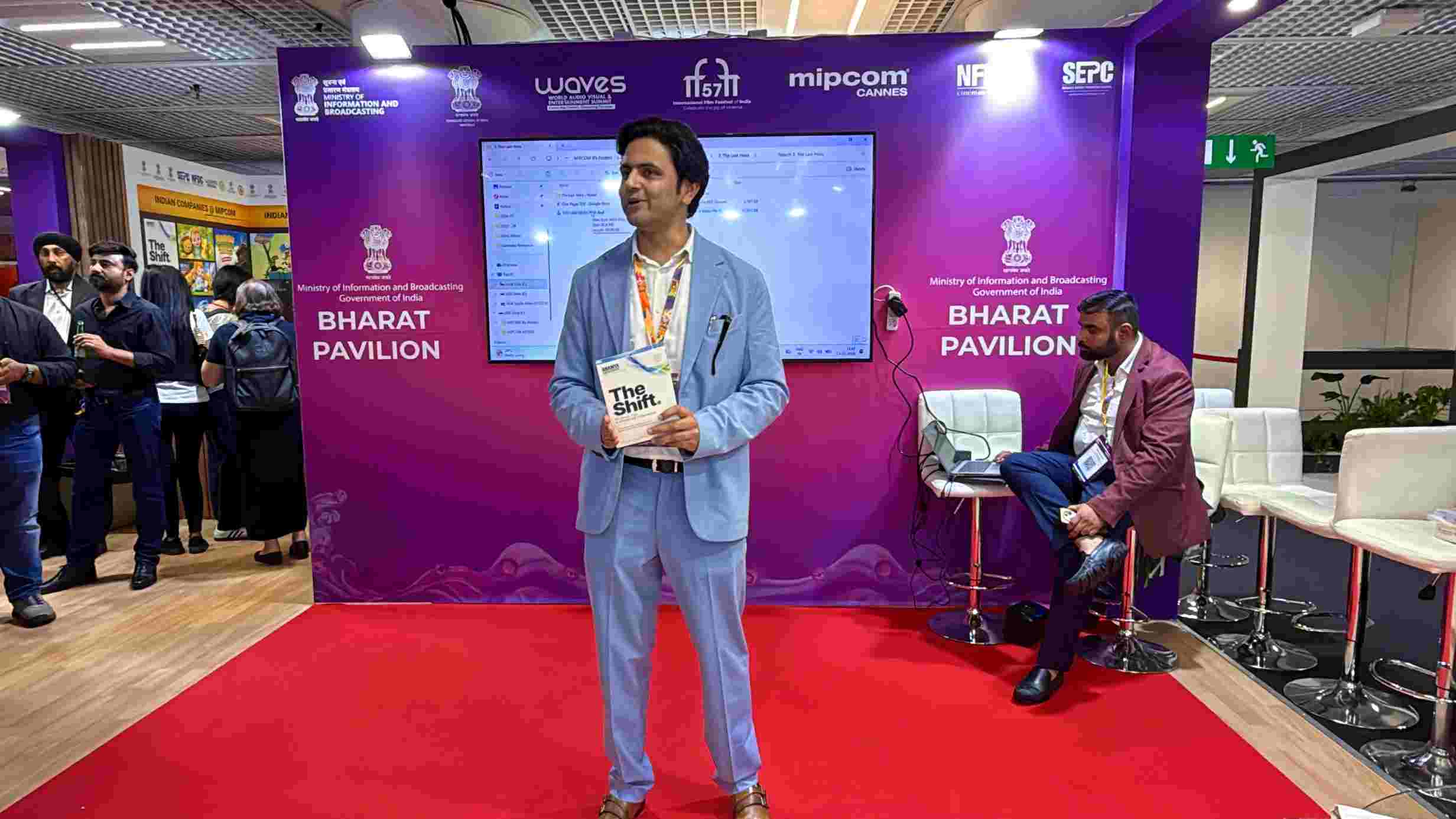
The summit brought together Asian and international entertainment executives to examine emerging opportunities in production, distribution, co-production and content monetisation.
Anamya participated in Table 6, hosted by Sebastian Kim, Vice-President, Content Distribution at CJ ENM, the South Korean entertainment company.
The discussion was titled “Beyond Breakout Hits: What It Really Takes for Asian Series to Reach Audiences in Europe and the Americas.”
The subject addressed a distinction becoming increasingly important to the entertainment business.
A programme achieving international recognition is a significant accomplishment. But establishing a sustainable global presence requires much more than the success of one title.
It requires a dependable pipeline of original stories, audience understanding, financing structures, professional production capabilities, distribution relationships and the ability to develop intellectual properties over time.
The challenge is not simply to take Asian stories overseas.
It is to build the industry structures that enable those stories to travel consistently, reach appropriate audiences and generate lasting commercial value for their creators and rights holders.
For independent production companies, this distinction is particularly relevant.
An individual project may introduce a studio to international markets. A sustainable creative business must be capable of developing and delivering work beyond that initial opportunity.
The growing relevance of Asian entertainment is supported by wider changes in international viewing and investment.
According to Netflix's engagement report for the first half of 2026, non-English-language titles accounted for more than one-third of all viewing on the platform.
This figure includes productions from several regions, not Asia alone. Nevertheless, the prominence of South Korean, Japanese and Indian content within the report demonstrates how language is becoming less of a barrier to international discovery.
South Korea provides one of the clearest examples.
Research released by Omdia and Digital i in June 2026 estimated that South Korean productions generated approximately 12.1 billion viewing hours on Netflix between April 2025 and March 2026, based on viewing data estimates across 17 markets.
The analysis identified South Korea as the most-watched source of Netflix content outside the United States within its measured markets.
The commercial significance extends beyond the popularity of individual series.
It demonstrates how sustained investment in creative development, production quality, original intellectual properties and distribution relationships can strengthen an entertainment industry's international position.
The region's economic scale is also substantial.
In its September 2026 assessment, Media Partners Asia forecast content investment of approximately US$15.1 billion during 2026 across seven Asian markets: India, Indonesia, South Korea, Malaysia, the Philippines, Thailand and Vietnam.
In a separate industry outlook, the research firm projected that Asia-Pacific screen-industry revenues could exceed US$196 billion by 2030, with growth increasingly supported by streaming, social video and connected television.
These figures reflect markets with different economic structures, content preferences and commercial models.
They also underline a broader trend: Asian entertainment is no longer relevant only as a source of programming for domestic audiences.
It is becoming a major participant in the international business of developing, financing, producing and distributing entertainment.
An important consideration in understanding Asia's potential is recognising the diversity of its entertainment industries.
The region cannot be approached as a single market with uniform audience preferences or production practices.
South Korea has demonstrated the international possibilities of premium scripted entertainment and format development.
Japan has developed globally recognised animation and character-based intellectual properties, supported by longstanding publishing, merchandising and licensing ecosystems.
India offers an extensive filmmaking tradition, a large domestic audience and a multilingual entertainment landscape spanning cinema, television, digital platforms and animation.
Across Southeast Asia, expanding streaming services and digital-content businesses are creating additional opportunities for local producers and regional collaborations.
Each market brings different strengths.
These differences are important because international success does not require Asian content to abandon its cultural identity.
In many cases, the distinctiveness of a story—its characters, setting, cultural context and emotional perspective—is central to what makes it interesting beyond its home market.
The challenge lies in presenting that distinctiveness through storytelling and production standards that audiences elsewhere can understand and appreciate.
For producers, this involves balancing local authenticity with international accessibility.
It also involves recognising that stories do not necessarily need to be conceived around a single universal formula.
The opportunity for Asia is not to make all its entertainment look alike, but to create stronger pathways through which its diverse stories can reach the world.
One of the most important changes in the international entertainment business concerns the distinction between producing content and owning the intellectual property behind it.
Historically, production companies in many markets have built their businesses around commissioned work, technical services or content supplied to broadcasters and distributors.
These activities remain essential to the industry.
However, original intellectual-property ownership can provide additional opportunities for long-term value creation.
A successful animated property, for example, may extend beyond its initial release through additional seasons, language adaptations, character licensing, merchandise and other forms of distribution.
A scripted format may be adapted for different countries, while an original entertainment concept can evolve across platforms and audiences.
These opportunities depend on the rights retained, the commercial agreements established and the continuing relevance of the property.
Ownership alone does not guarantee profitability.
Developing and sustaining an original IP requires investment, audience understanding, professional execution and access to reliable distribution partners.
Yet the distinction matters.
The international future of Asian entertainment will depend not only on how much content the region produces, but also on how much original value its creative businesses are able to develop and retain.
This is particularly relevant to independent producers seeking to build long-term enterprises rather than operate solely from one production assignment to another.
The expanding international demand for entertainment has been accompanied by growing complexity in distribution.
Broadcasters, subscription streaming services, advertising-supported platforms, connected television, social-video services and emerging short-form formats now operate alongside one another.
Different audiences may discover and consume the same intellectual property through entirely different channels.
For producers, this creates opportunities but also requires more careful commercial planning.
An international strategy must consider the suitability of a project for particular markets, its language requirements, possible licensing arrangements, exclusivity conditions and the rights available for future exploitation.
There may be value in selling a completed programme, developing a co-production, licensing a format or working with distribution partners on a longer-term basis.
But no single model is appropriate for every project.
Financial discipline is equally important.
The expansion of streaming has increased the availability of international content, but it has also intensified competition for audience attention and production investment.
The ability to produce more content does not necessarily mean that every project will find a viable commercial market.
Producers must therefore combine creative ambition with an understanding of financing, distribution and the economics of audience acquisition.
This is one reason the conversation at MIPCOM was relevant beyond individual success stories.
The issue is not merely how Asian entertainment can become visible internationally.
It is how that visibility can be converted into sustainable industry growth.
The international movement of entertainment is also becoming more closely connected to audience research.
During the summit, Anamya had the opportunity to interact with François Gioux, International Sales Director, and Anqi Liu, Senior Research Analyst, of Glance, part of Médiamétrie.
Glance specialises in international television and video audience intelligence, providing research relevant to broadcasters, streaming platforms, production companies and distributors.
These interactions were valuable in understanding the importance of evidence-led market assessment as content businesses consider international expansion.
A story's success in its domestic market does not automatically establish demand in another territory.
Audience preferences, genre performance, viewing habits, distribution conditions and cultural familiarity can differ considerably.
Research can help producers examine where opportunities may exist and how a project might be positioned for particular audiences.
This perspective also aligns with a wider industry shift identified in Glance's 2026 research, From Local Hit to Global Franchise, developed in collaboration with MIPCOM Cannes.
The study examined how Asian intellectual properties travel internationally through acquisitions, adaptations and commissioning activity across more than 45 markets.
Its broader significance lies in recognising that an original idea can generate value in several ways, rather than through the international sale of a finished programme alone.
For independent production companies, access to market intelligence and informed professional relationships can help connect creative development with realistic international opportunities.
India occupies an important position within this changing landscape.
According to the FICCI–EY Media and Entertainment Report released in March 2026, India's media and entertainment industry grew by approximately 9% in 2025 to ?2.78 trillion.
Digital media became the country's largest segment, crossing ?1 trillion in annual revenues for the first time.
The report also projected the wider industry could reach approximately ?3.3 trillion by 2028.
These figures demonstrate the scale of India's domestic entertainment economy.
But domestic size and international reach are not the same thing.
For Indian content to develop a more consistent presence overseas, production companies must increasingly consider international distribution, audience positioning, localisation and intellectual-property development alongside domestic commercial requirements.
India's multilingual storytelling traditions represent a substantial creative resource.
Stories developed in Hindi, Tamil, Telugu, Malayalam, Bengali and other Indian languages can carry distinctive regional identities while addressing human experiences relevant beyond their immediate audiences.
Animation and family entertainment offer further opportunities because visual storytelling can sometimes travel across cultural and linguistic boundaries with appropriate adaptation.
At the same time, original properties require strong writing, reliable production capabilities and a clear understanding of their intended audiences.
For Indian producers, the long-term opportunity is not simply to supply more content to global streaming services.
It is to contribute original stories, formats and creative capabilities to an increasingly interconnected international entertainment industry.
International co-productions represent another possible route for Asian content to reach wider markets.
By combining creative expertise, financing, production resources and distribution relationships across territories, producers may be able to develop projects that would be difficult to undertake independently.
However, successful collaboration requires careful alignment.
Partners must share an understanding of the creative vision, target audience, responsibilities and commercial structure of the project.
Questions concerning intellectual-property ownership, investment, production control, territorial rights and revenue participation need to be addressed clearly.
These arrangements should support the creative identity of the story rather than simply reshape it to accommodate multiple markets.
For independent Indian companies, international collaboration can also provide opportunities for technical learning, new production standards and wider professional exposure.
The longer-term benefit can extend beyond an individual title when those experiences contribute to stronger local production capabilities.
That connection between international opportunity and regional industry development is particularly important to Anamya.
Anamya's participation in the Asia x Global Executive Summit was closely connected to our efforts to develop original Indian intellectual properties with international relevance.
At MIPCOM Cannes 2026, we introduced projects representing different genres, audiences and storytelling approaches.
The Last Heirs, an original 3D animated science-fiction adventure set in 2126, explores environmental responsibility and the consequences inherited by future generations.
Rango Tango, our original children's animation property, is being developed further through a planned second season, with an expanded creative vision and an exploration of AI-driven vertical animation.
Battery Babu, a Hindi corporate thriller, examines ambition, institutional responsibility and the complexities of India's evolving green-energy economy.
These projects differ considerably in format and subject.
What connects them is our interest in developing original entertainment that can engage audiences while exploring meaningful ideas.
Our aspiration is to create stories that emerge from India without being confined to India as their only possible market.
At the same time, we recognise that international appeal cannot be established through creative ambition alone.
It requires development discipline, professional production standards, appropriate financing, market understanding and the right distribution relationships.
For Anamya, this is a continuing process.
Through Anamya Studio VFX in Lucknow and our operations in Noida, we are strengthening the production capabilities and creative teams required to support our original projects and international collaborations.
We believe this work can also contribute to the wider development of the creative industry in Uttar Pradesh.
A stronger Indian entertainment economy should create opportunities not only for companies operating in established metropolitan production centres, but also for capable artists, writers, animators and technical professionals working in emerging regional hubs.
The Asia x Global Executive Summit at MIPCOM Cannes 2026 reflected a significant development in the international entertainment business.
Asia's importance is increasingly connected not only to the scale of its audiences, but also to the originality of its stories, the capabilities of its production industries and the commercial potential of its intellectual properties.
The next stage will require greater attention to sustainable financing, informed distribution, long-term IP development and international collaboration.
For independent producers, the opportunity is substantial, but so are the demands.
Success must be built through consistency, professional credibility and the ability to understand both domestic audiences and international markets.
For Anamya, the experience at Cannes reinforced our belief that original stories conceived in regional India can aspire to reach audiences across the world, provided they are supported by the creative and industry capabilities necessary to take them there.
Asia's growing role in global entertainment should not be measured only by the number of international hits it produces. Its long-term significance will lie in the creative industries, original intellectual properties and sustainable international relationships it builds around them.
That is the larger opportunity we see for Indian storytelling in the years ahead.
ANAMYA PRODUCTIONS & CONSULTANCY PVT. LTD.
International Engagement: Asia x Global Executive Summit, MIPCOM Cannes 2026
Industry Partner: ContentAsia
Date: October 12, 2026
Anamya Representatives: Apoorv Chaturvedi, Managing Director; Chahat Aggarwal, Director & Creative Head
Roundtable: Beyond Breakout Hits: What It Really Takes for Asian Series to Reach Audiences in Europe and the Americas
Table Host: Sebastian Kim, Vice-President, Content Distribution, CJ ENM
Original IPs: The Last Heirs | Rango Tango | Battery Babu
Production Ecosystem: Anamya Productions | Anamya Studio VFX | Anamya Genverse
Origin: Lucknow, Uttar Pradesh, India
Entertainment that engages. Storytelling that matters.
The analysis draws on the official MIPCOM Asia x Global Executive Summit programme, ContentAsia's summit coverage, the Media Partners Asia 2026 industry outlook, Omdia's analysis of Korean content viewing, Netflix's first-half 2026 engagement report and the 2026 FICCI–EY report.
The industry figures are attributed to their respective research organisations. Forecasts are identified as projections rather than actual outcomes.