Some crimes begin with an act of violence. Others continue because someone nearby sees what is happening and decides not to intervene.
The Andekha social impact film by Anamya Productions is built around this uncomfortable truth. It does not only ask what happens when a woman is placed in danger. It asks what happens to the witness who recognises that danger, hesitates and then walks away.
The narrative follows a bystander who witnesses a crime but chooses to retreat from the situation, hoping to avoid confrontation, responsibility and personal risk. He convinces himself that the incident does not concern him. But the decision does not disappear.
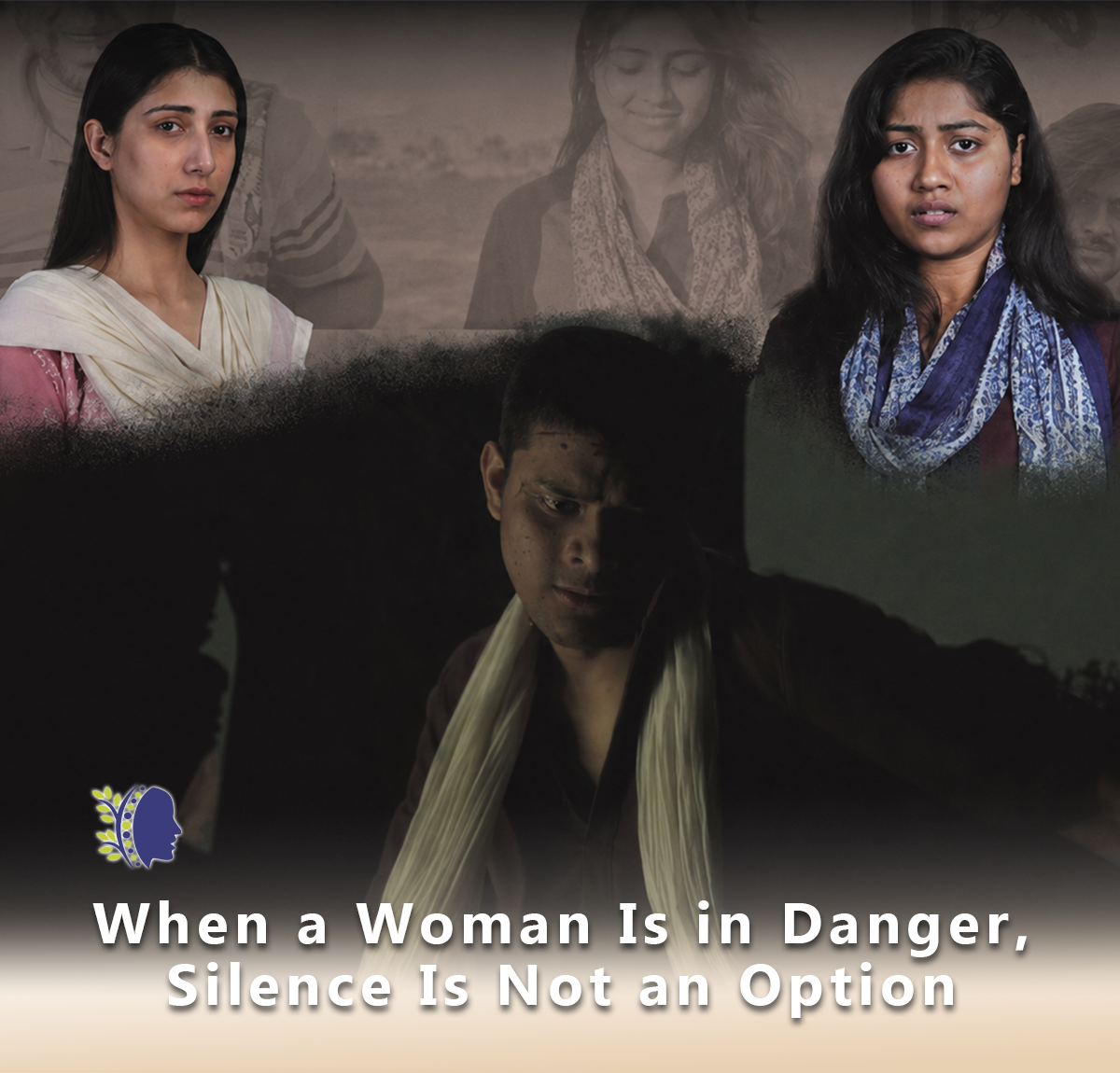
When fate places him inside a similar crisis, the fear he once ignored becomes painfully personal. He is forced to confront the consequences of his silence and recognise the human cost of treating another person’s distress as someone else’s problem.
Through suspense, moral conflict and emotional reversal, Andekha becomes more than a thriller. It becomes a question directed at every viewer:
What would you do if the woman in danger were someone from your own family?
Women’s safety is frequently discussed through laws, statistics, awareness campaigns and public appeals. Yet the real test of social responsibility often arrives without warning—on an empty road, outside a building, in a neighbourhood, at a workplace or in any situation where someone senses that a woman may be unsafe.
Danger is not always unseen. Sometimes it is seen clearly and then deliberately ignored.
As a social awareness short film, Andekha explores the distance between witnessing an incident and responding to it. Its title represents more than something being invisible. It reflects the human tendency to behave as though nothing was seen.
That distinction gives the film its emotional and social power.
The film does not suggest that a person should recklessly enter a dangerous confrontation. Instead, it advocates responsible intervention. This may mean alerting the police, raising an alarm, calling nearby people, informing security personnel, observing important details or refusing to let suspicious activity pass without attention.
Silence may appear to be the safest choice for a witness, but for a woman in danger, that silence can become abandonment.
By placing the bystander at the centre of the narrative, Andekha expands the conversation around women’s safety. It reminds viewers that violence is not shaped only by the offender and the victim. It is also influenced by the behaviour of witnesses, communities and institutions surrounding the incident.
One of the most powerful ideas explored in the film is the bystander effect—the tendency of individuals to become less likely to help when responsibility feels uncertain or when they assume that someone else will take action.
A witness may believe that another person has already called for help. Someone may fear police questioning, legal complications or retaliation. Others may convince themselves that they misunderstood the situation.
In many cases, people simply continue walking.
Each decision may appear small, but together they create a dangerous environment in which a person in distress can remain unsupported even when others are present.
The Andekha social impact film translates this psychological reality into a gripping cinematic experience. Rather than explaining the issue through a lecture, the film allows the audience to experience the hesitation, avoidance and eventual guilt of the bystander.
This is where cinema becomes an important tool for social communication. Information can explain why people fail to act, but storytelling can make the audience feel the consequences of that failure.
In Andekha, one moment of silence becomes the moral centre of the entire story. The protagonist’s decision follows him, challenges him and eventually destroys the comforting belief that another person’s suffering has nothing to do with him.
Society often reacts differently when danger feels distant and when it reaches someone personally connected to us.
A stranger’s distress may be treated as an unfortunate incident. But when the same danger threatens a sister, daughter, friend, partner or colleague, the emotional and moral response changes immediately.
Andekha uses this reversal as more than a dramatic plot device. It becomes a mirror held up to the audience.
Why must a woman become “one of our own” before her safety matters?
Every woman in danger is someone’s family. More importantly, her right to safety should not depend on whether the witness knows her personally.
This is where the film becomes a powerful life saving awareness film. Its message is not limited to sympathy after an incident. It encourages vigilance at the moment when timely action may prevent violence, summon help or interrupt a dangerous situation.
The bystander in Andekha is eventually forced to experience the fear he once chose not to acknowledge. His journey is shaped by guilt, recognition and the painful understanding that silence can create consequences far beyond the original moment.
Social issue films often struggle to balance purpose with storytelling. The message can become too direct, characters can feel symbolic, and the film may begin to resemble an instructional advertisement rather than a believable human experience.
Andekha takes a more cinematic route.
Writer and director Ujjwal Pandey, along with the film’s creative team, approaches the subject as a moral thriller. The audience is drawn into the narrative through tension, consequence and character psychology. The social message emerges from the experience of the story instead of being imposed upon it.
The screenplay, developed by Deepak Sharma and Ujjwal Pandey, uses reversal and consequence to strengthen the film’s central idea. A choice made earlier returns in another form. A moment dismissed as someone else’s problem becomes deeply personal.
The structure gives the story the quality of fate while keeping the issue grounded in a reality that audiences can recognise.
Cinematography, sound, performance and editing work together to create unease. The film’s tension is not dependent on spectacle. It is built around the knowledge that something is wrong and the fear that nobody may act in time.
The most disturbing moment is not only the crime itself. It is the decision of the witness to leave.
The phrase Anamya Productions Andekha represents more than the name of a film and its production house. It reflects Anamya’s larger commitment to the social impact genre and its belief that important subjects deserve compelling storytelling.
Anamya Productions has developed its creative identity around impact-driven narratives across different formats—from original shows and short films to music videos, campaign-led audiovisual content and socially relevant stories.
Its approach is based on a clear principle: a social message should not feel like a lecture. It should become an experience.
The audience must be given characters to follow, conflicts to understand and emotions to recognise. Only then can a message remain with them after the film ends.
This philosophy is visible throughout Andekha. The film does not reduce women’s safety to a slogan or a generic public appeal. It creates a situation in which viewers are compelled to examine their own behaviour.
Would they notice that something was wrong?
Would they intervene responsibly?
Would they call for help?
Or would fear and convenience persuade them to remain silent?
These questions allow the film to operate not only as entertainment, but as a wider social intervention.
As a social impact filmmaking company, Anamya Productions works at the intersection of narrative, social purpose and audiovisual execution.
Its focus on the social impact genre extends across stories created for awareness, public engagement, institutional communication and cultural conversation. Whether the format is a short film, show, music video, campaign film or digital narrative, the creative objective remains consistent: transform an important issue into a story that people can connect with.
This requires more than selecting a socially relevant topic. It requires research, ideation, writing, screenplay development, casting, direction, cinematography, performance, sound and editing to work together around one clear emotional and social objective.
Andekha reflects this integrated creative approach. The subject is serious, but the storytelling remains cinematic. The message is direct, but the characters are allowed to experience conflict rather than simply deliver information.
This balance is important because audiences rarely respond to communication that appears to instruct them from a distance. They respond when they recognise a situation, understand its emotional stakes and imagine themselves inside the decision.
A film cannot replace law enforcement, safer public spaces, institutional accountability, gender sensitisation or strong legal systems. But films can influence the cultural environment in which people make decisions.
Stories can challenge behaviours that have become normal. They can make audiences recognise harmful patterns before they escalate. They can start conversations in homes, schools, colleges, workplaces and communities.
Most importantly, storytelling can turn an abstract issue into an immediate human experience.
That is the power of a social message film by Anamya Productions.
When viewers watch a character hesitate, they may recognise their own fear. When they see the consequences of inaction, they may reconsider how they would respond in a similar situation.
A film cannot guarantee behaviour change. But it can create the emotional interruption from which change begins.
Andekha attempts to create exactly that interruption.
Its message is not that every witness must become a hero. Its message is that no witness should automatically choose indifference.
The film’s message should not be misunderstood as encouraging people to place themselves in uncontrolled danger.
Direct physical intervention may not always be safe or appropriate. Responsible action depends on the circumstances.
A witness can contact emergency services, call nearby people, alert security personnel, observe identifying details, create attention from a safe distance or remain available to provide information.
Even a small action may disrupt the isolation on which many offenders depend.
The opposite of silence is not recklessness. It is responsibility.
This distinction makes Andekha especially relevant in a time when people are often surrounded by phones, cameras and crowds, yet someone in distress can still remain unsupported.
Technology has increased the ability to record incidents, but recording alone is not the same as helping.
The film challenges the audience to consider whether their first instinct would be to protect the person, summon support and create accountability—or simply document the moment and walk away.
The most effective social impact stories do not end when the screen turns black. They remain in the viewer’s mind because the question they raise has not been fully resolved.
As a life saving awareness film, Andekha leaves the audience with the weight of a decision.
It does not allow viewers to believe that moral failure belongs only to obvious villains. The central failure is ordinary. It is created by hesitation, avoidance, fear and the desire to remain uninvolved.
That is precisely why the film feels relevant.
Most people do not imagine themselves as indifferent. Yet indifference can be created in seconds—through a choice to keep walking, close a door, ignore a sound or assume that someone else will respond.
By making this moment the heart of the narrative, the social awareness short film creates a direct appeal to conscience.
Women’s safety is not only a subject for governments, police departments, activists or families. It is also a shared civic responsibility.
When a woman is in danger, silence is not neutrality.
Silence is a decision.
Andekha, a social message film by Anamya Productions, is a call to recognise what society often trains itself to overlook.
It is a tense, human and morally urgent story about guilt, responsibility, consequence and the role of a witness.
The film asks every viewer to carry one thought beyond the screen:
The person in danger may be unknown to you, but the responsibility to respond does not disappear because you do not know her.
Stay alert. Act responsibly. Seek help. Refuse to look away.
Because when someone’s safety is at stake, silence should never be the only response.
Follow Anamya Productions on Instagram and Facebook to discover more social impact films, original shows, purpose-led audiovisual stories, music videos and awareness-driven creative work.